I remember staring at the faded photograph with a certain amount of numbness. In my hand I held the image of a child, with long, brown hair, sleek straight with unwashed greasiness. Her brown eyes looked pained and slightly swollen; her face was covered in scabs on one side. Her nose and lips were slightly swollen. It was obvious she had endured a horrid beating; yet, there was an ever-so-slight hint of a smile. Her thin shoulders barely held the oversized shirt in place, though it slid to one side exposing flecks of blood still dried on her unwashed shoulder. On the shirt was the word, “SLAVE.”

My stomach was nauseous as I looked back at my 14-year-old self from the distance of a few decades. Not because of the bike accident that caused the broken nose, busted teeth, and shredded face. With no training or book learning about racism, I still knew that photo was wrong. The picture was taken to document my injuries suffered when my bicycle broke and sent me face-first into the pavement. But when the print came back and we saw the nightshirt, it made us giggle at the beaten “slave” girl. I was disgusted at the memory that my family and I could possibly think there was anything humorous. How could we not know?
More than that, I stared at that shirt. I tried to remember why I was even allowed to have it. My family was never hateful, consciously worked on being non-discriminatory, and taught me that Jesus loves all the children of the world.
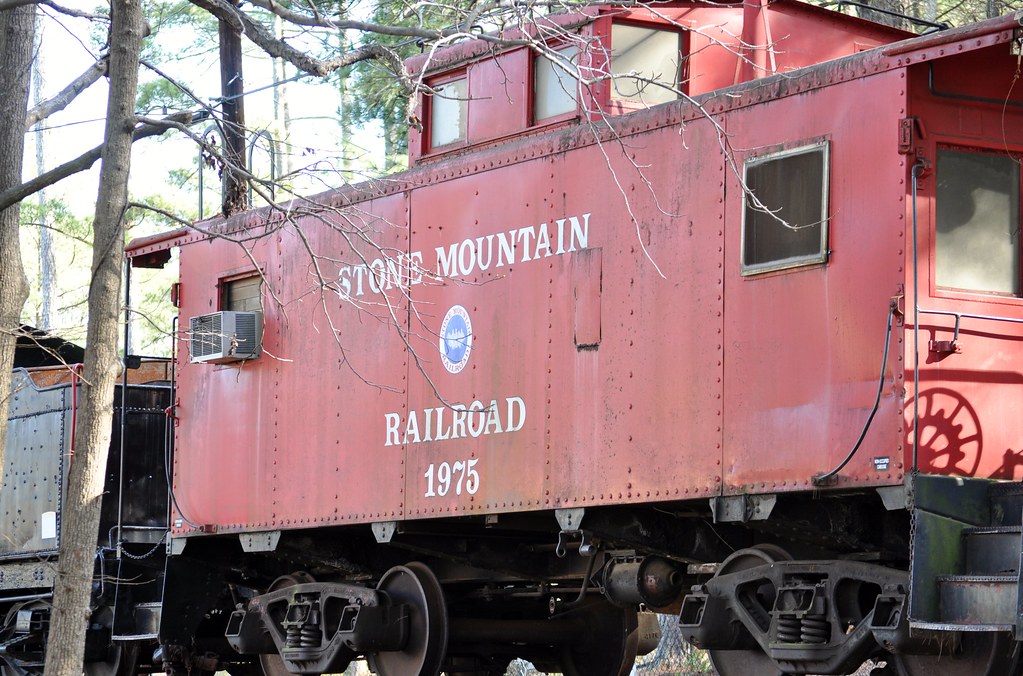

But I clearly remember riding the train and shopping in the tourist shop at the base of Stone Mountain. We were there with my cousins. We kids tried on Union (“Yuk”) and Confederate hats, aimed toy pistols at each other, played with the rebel soldiers and cannons. I chose a confederate battle flag pin and a nightshirt printed with the word, “slave” for my souvenir after a day of fun.
I threw the picture away, too many years too late. Worse, I got rid of the pin too many years after that. There are things we throw away. We don’t hand them down, or pack them up for a memory. We trash them, even if they are burned into our memory. One day, even though that token may be long gone, the memory of it may need a reframing, even a retelling.
Now there is talk again about the mountain carving.
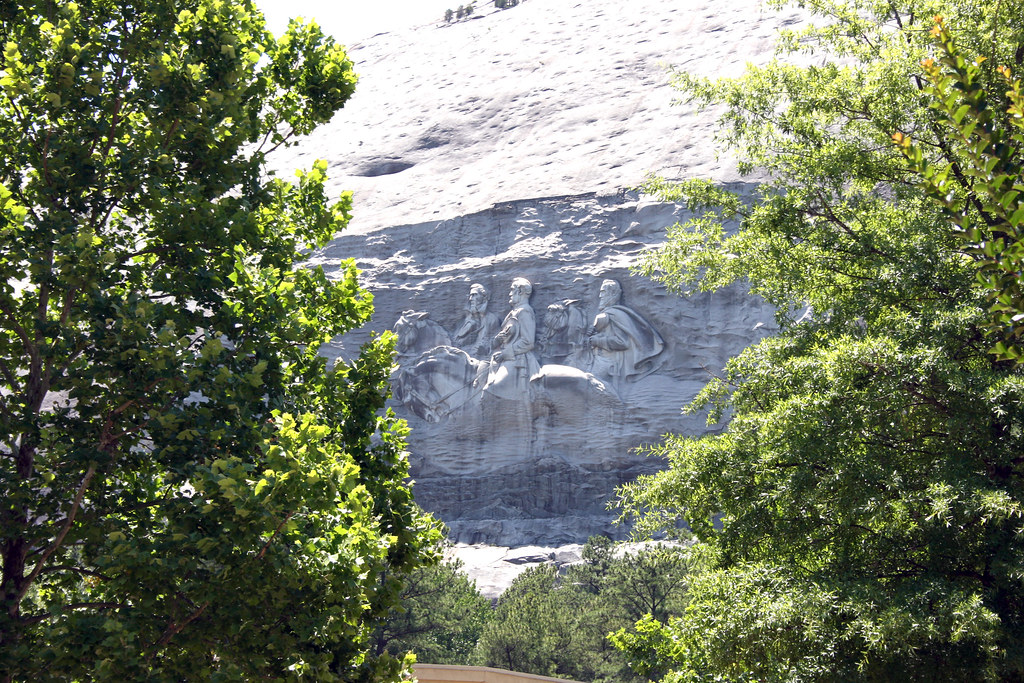
That carving was an amazing creation which I remember seeing in various stages. I remember the scaffolds hanging so high, I couldn’t even tell if men were working. I remember being told a school bus could fit inside Lee’s horse’s mouth. I remember seeing it finished and being in awe of the sculpture. The names of the soldiers were known to me as southern heroes who led my great, great grandfather in battle. And it all existed in my hometown, Stone Mountain.
We had summer picnics below their steady gaze, and played in the creek I was certain their horses crossed. We bought tourist fare from the shop below their memorial. Surely, they were great and honorable men.
I am a white, southern, Carolina belle and Georgia peach, grits-lovin’ girl. I believe the carving must go the way of that slave shirt. It absolutely represents a glorification of sedition, and the evil of white nationalist supremacy and slave-holding. It does not represent honor. It does not represent a virtuous loyalty. It does not represent a southern heritage of which to be proud. As to it being placed, and remaining in place, in order to remember history, let’s remember the history.
The United Daughters of the Confederacy in Georgia were behind the memorial. The president of the Daughters of the Confederacy is reported to have said of the KKK and the memorial during its planning, “I feel that it is due to the Ku Klux Klan which saved us from Negro domination … that it be immortalized on Stone Mountain.”[1] Certainly, everything there is a reminder that the Lost Cause has not been forgotten or forsaken.
Everything there, from the 13 terraces and flags of the confederate states to the memories of a now wiser, humbled adult who cannot shake the memory of a nightshirt no one thought twice about, everything there is meant to rewrite the facts of history in order to glorify an antebellum lifestyle of sin and human evil.
Dear white people, this is how ingrained racism is in our culture. It doesn’t have to be this way. To be free of this evil, we must face our own culpability in it by remembering honestly the ways we failed to see the harm we perpetuated. One of those ways is the continuing pilgrimage so many of us take to the lawn that spreads before that carving, enjoying a barbecue as if you’ve come home to your beloved “Twelve Oaks,” laughing below their gaze, even as a war looms, without blinking an eye or teaching the truth.
Some will say that is what we can do—leave the carving pristine and simply reeducate one another. Keep it but retell it. Pass down the truth today as easily as that tourist shop sold nightshirts. But there was a certain truth to that shirt I slept in so long ago. I was enslaved to the myth of the Lost Cause and the evil of racism. That enslavement continues in us white people even now.
We all know that surfacing our racism in front of Stonewall Jackson and Robert E. Lee is not going to happen. We all know that simply reeducating our children while they twirl glow in the dark necklaces on the lawn is not going to happen. We all know that is not going to happen as long as Jefferson Davis leads his soldiers across the mountain.
Freedom costs and repentance takes action, not words alone. If we are to be released from the enslavement of racism, the devilish marks of honor about it must be demolished as a sign of our willingness to participate in eradicating white supremacy from our lives. There are things we throw away in order to take hold of something new, a new memory, a new truth, a new hope. The history the carving tries to teach must be thrown away.
One recommendation is to let the force of nature cover it up.2 Let the weeds and trees fill in the cracks. Let the rain wash the granite etching new lines into the carving. Fill the ledges and crooks and crannies with dirt and seed it to help that along. I would add that a new monument and museum must be built, perhaps along the lines of the National Memorial for Peace and Justice in Montgomery, AL; perhaps something that describes the history of reconstruction and the rise of the KKK alongside the taking of the land of the Native Americans of the area.
As a generation watches the carving disappear, and a truth-telling memorial rise, perhaps the old south will give way to a new south working for true freedom and racial justice; and finally, the Lost Cause will be defeated. The myth of a superior race and the glorification of an antebellum way of life must be actually “gone with the wind,” put to death. Their memorials, including the Stone Mountain carving, must be buried properly so that the truth can actually set us all free.
[1] Really understanding Stone Mountain’s history, Kevin Riley, 9/29/2017 https://www.ajc.com/news/opinion/opinion-really-understanding-stone-mountain-history/qRMXUMMKsyYsaZoBwD5pXI/ accessed 19:45 on 7/4/2020
2 I apologize but cannot find the author and reference for this concept. Please let me know who originated this idea that I might edit and properly credit the concept.
3 Images: “Bent Wheel” b;y helicopterspy is licensed under CC BY 2.0; “Stone Mountain February 2012” by randa2e is licensed under CC BY-NC-SA 2.0; “Confederate Paraphernalia” by Travis S. is licensed under CC BY-NC 2.0; “The Carving” by Listener42 is licensed under CC BY-SA 2.0

 bevfriedlander