
The lack of a normative acceptance of science is troubling. The lack of a normative acceptance of medical science is confounding. Both are deadly. However, it is the lack of a cohesive acceptance of language and acceptance of definitions and usage of words which marks the end of English-based American culture. The presidential debate of September 29, 2020 is the beginning of nailing the coffin lid shut. And it might be a good death. A good death of the America we have known could mean new birth of the America we believe in.
Death
Language is both a reflection of and a creator of culture. It is this specific trait of linguistic propaganda that ultimately creates cultic following and leads to division. Such a twisted use of words is meant to establish a predetermined mindset and call forth a following that cannot otherwise exist within the context of its current cultural mindset.
The Debate
To recap, Moderator Chris Wallace asked Trump to condemn white supremacists and in the ensuing back and forth, Trump asked for a name, and the Proud Boys were subsequently offered as a particular group to condemn. The Proud Boys is an organized, armed group listed as a hate group by the Southern Poverty Law Center. It is identified as racist, antisemitic, and dangerous. Examples abound of their instigation of street fights and crowd violence.[1]
Trump told them to, “stand back and stand by.” This directive was sandwiched between the larger recommendation by Trump that someone do something about the “radical left,” and “antifa.”
Our Debate
In the hours and days following, the nation has been debating whether or not Trump condemned white supremacy or denounced the Proud Boys. Trump effectively made the conversation about specific people, a denunciation many Americans would be uncomfortable with; and, therefore he was able to provide the basis for the ensuing argument that of course he denounced the ideology, now and historically, just as he denounced antifa, but not our fellow Americans. He effectively shifted the focus from a general “white supremacists” to “give me a name,” and slightly altered the words of the moderator, from “stand down” to “stand back.” It is such a slight shift, with a nearly unnoticed misuse of the moderator’s suggested words, that one might wonder if the question was prepped.
Language
However, the moderator also used the word “condemn,” and that sentiment, which is the focus of the ensuing unrest, was not made.
Interestingly, Merriam-Webster offers racism and bigotry as the examples of using these words in a sentence. Even the dictionary definition of the words is directly exemplified by the very request that was made at the debate. This is a further indication of the insidiousness of white supremacy within the American culture.
While many of us can point to situations when our own viewpoints contrasted with friends and family over the last few years; and, we can identify trends in the larger American political landscape that mirror those contrasts, it will be this moment historians mark as the collective realization that white America must finally choose sides.
The debates on personal social media pages are drawing lines that divide us into two distinct branches. On either side there may be climate deniers and anti-vaxers. On either side there may be mask wearers and Covid conspiracy believers. On either side will be whites that don’t understand structural racism and those who are confessing white privilege. But when neither side can agree on the meaning of words in their common language, and the degree of nuance in its usage, when they cannot agree on the clear difference in the meaning of “condemn” and “denounce,” the basis for a common life is forever erased.
Time to Choose
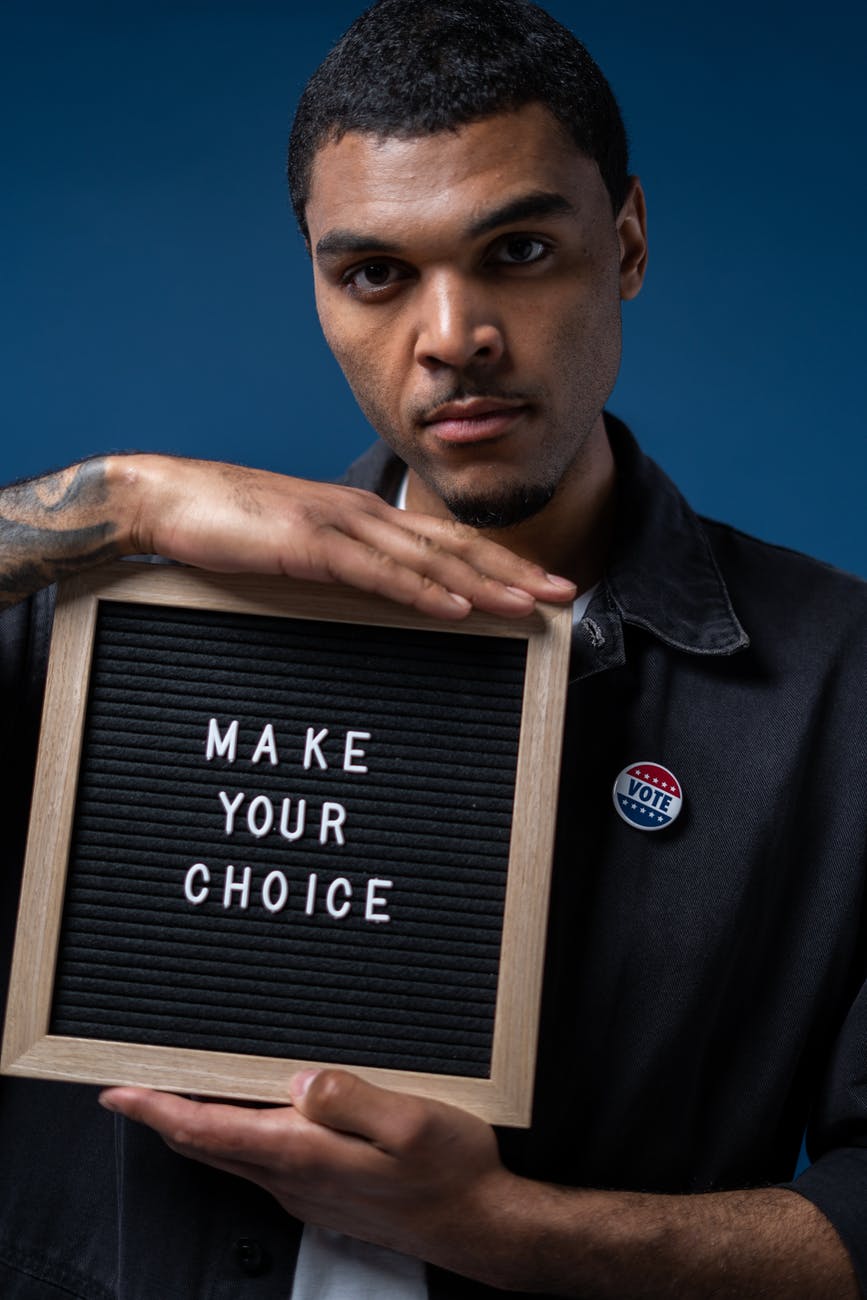
White people[4] must now decide which culture they will follow: the one in which the lack of condemnation of white supremacy is defended and validated with affirmations that the non-condemnation language was actually a denunciation, or, the one in which denunciation and condemnation are clear expressions of white supremacy as an evil and reprehensible ideology incompatible with America’s future.
We have been headed to this moment since, at least, the entrance of “alternative facts” became “alternative truths.” While I am hopeful that the civil unrest I expect will not become a second American civil war, it is no less a time of reckoning, of deciding which version of “We hold these truths to be self-evident,” will prevail.
I believe once again Americans will show up with enough strength, even the will to die for, a vision of true equality among all human beings, a vision of life for everyone, a vision of liberty that allows each to pursue their happiness even as the other is protected from inhumane overreach. I believe this battle will finally conclude the 400 years of American enslavement to the evil of white supremacy.
New Birth: The Re-Declaration of our Vision

Let us nail the coffin closed on the America of white supremacy so that the long-awaited United States of America can finally be birthed, the one which will finally exemplify that we do indeed
“hold these truths to be self-evident, that all [people] are created equal, that they are endowed by their Creator with certain unalienable Rights, that among these are Life, Liberty and the pursuit of Happiness.”[5]
Personal Statement of Condemnation and Hope
For the record, I condemn white supremacy. I denounce its use, its meaning and its constructs for the past, current, and future creation of a culture that lifts a single portion of humankind into a life of privilege over others and at their expense. In the words of my religious tradition, “Trusting in the gracious mercy of God, I turn from the ways of sin and renounce evil and its power in the world,” so help me God.
May I, by the Spirit’s power to sanctify, be an instrument of hope and change for the coming on earth as it is in heaven, such that I regard and strive for a time and place in which all people are celebrated as bearers of the image of their Creator and loved, unconditionally.
[1] https://www.splcenter.org/fighting-hate/extremist-files/group/proud-boys
[2] https://www.merriam-webster.com/dictionary/condemn
[3] https://www.merriam-webster.com/dictionary/denounce
[4] I highlight white people specifically here, as white people in America hold the majority of positions of power, and justice, and law enforcement, and the ability to write the history of the nation within the educational institutions. It is also my context culturally and thus my sphere of experience in this time of racial unrest, signifying the dominant group of my conversation partners.
[5] The original document used the word, “men” and over time has been understood to mean more than the male of our human species. “Men” was the word used to denote the universal “humankind.” Yet even then, women and children were property of males, and Africans were imported as slaves and considered less than a full human being. Other ethnic peoples were limited in their rights to less than those of white, European males. The substitution of “people” reflects the judicial and, surprise, linguistic adaptive understanding that the ideological framework has become fully inclusive of all humans for the purposes of our jurisprudence, even as the ideology of white male supremacy remained a stubborn part of our structural American culture and constant source of race-based bigotry and discrimination. Thus, in the context of this article, this would be another word that would need evaluation as to the definition to be agreed upon. Note: 1a(1): an individual human especially : an adult male human…b: the human race HUMANKIND // the history of man — from https://www.merriam-webster.com/dictionary/man

 bevfriedlander